Please note: Some of the acorns sold/sown here originally come from arboretums (distributed worldwide). Arboretum acorns have a higher probability of hybridization occurring.
However, we do not carry out any genetic analyses. 100% species safety cannot be guaranteed in this shop. Dismiss
Buy acorns internationally. Buy oaks. Special oaks, acorns and other seeds for collectors and plant enthusiasts. Many species resistant to climate warming. Lots of climate trees.
Buy acorns internationally. Buy oaks. Special oaks, acorns and other seeds for collectors and plant enthusiasts. Many species resistant to climate warming. Lots of climate trees.
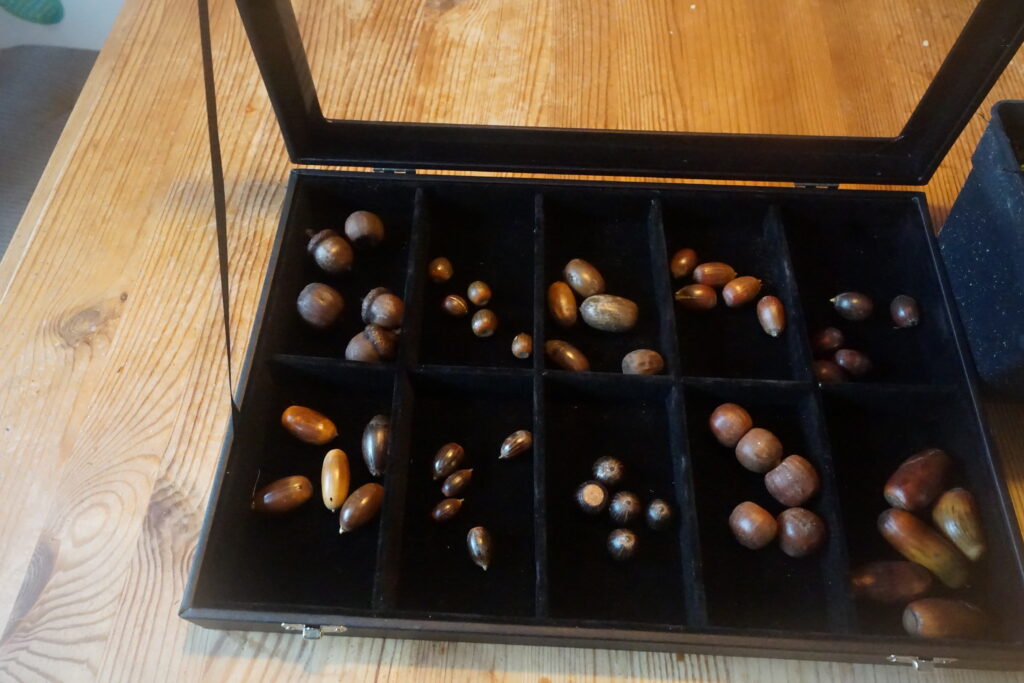
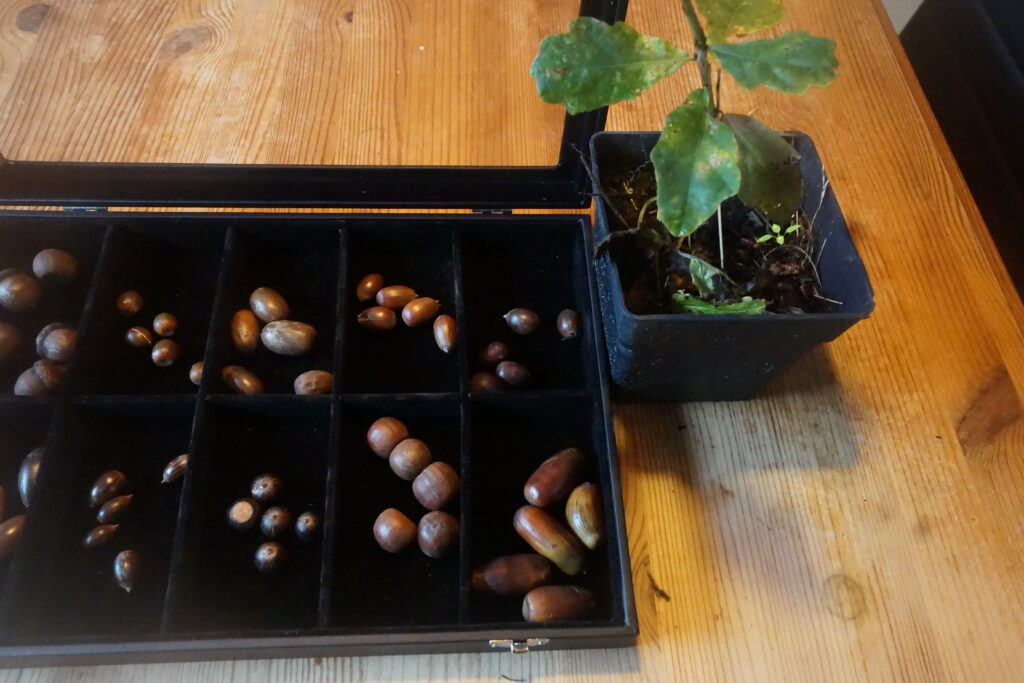
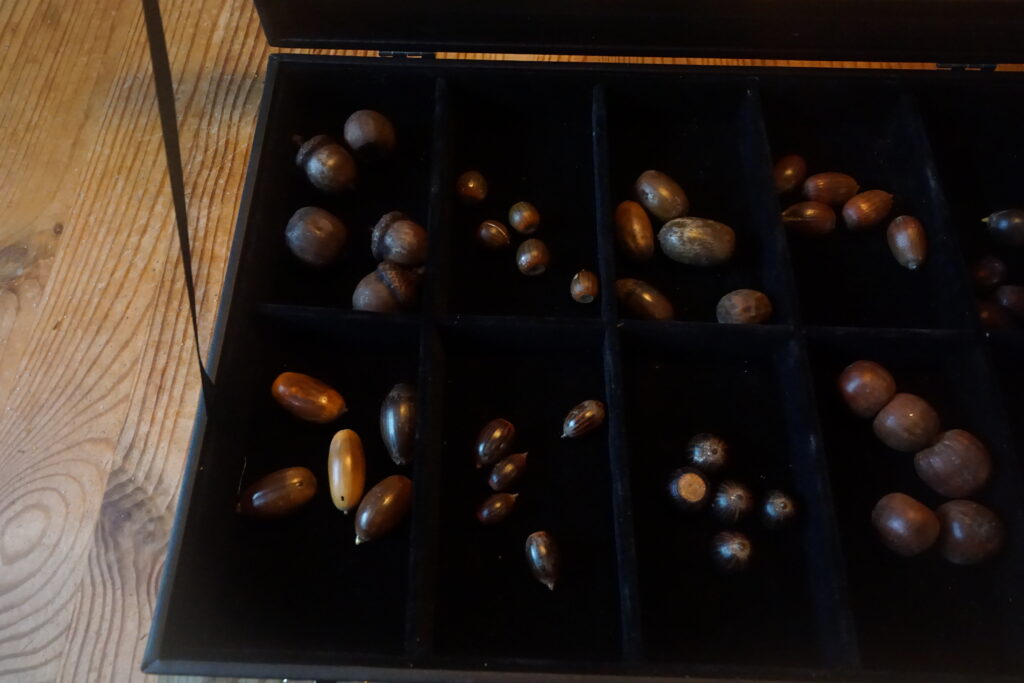
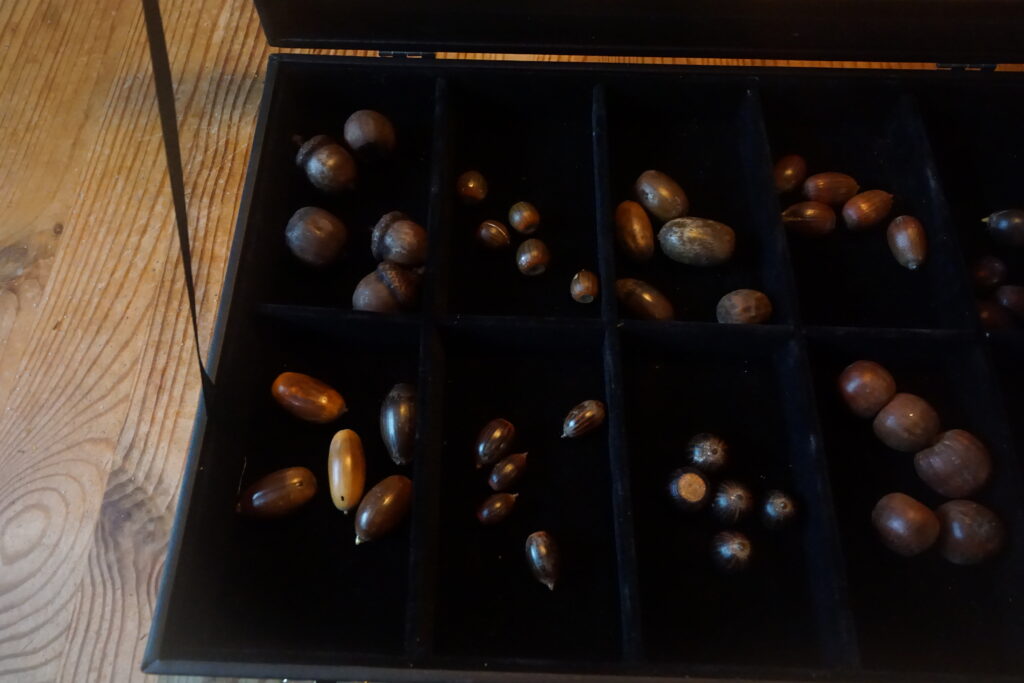
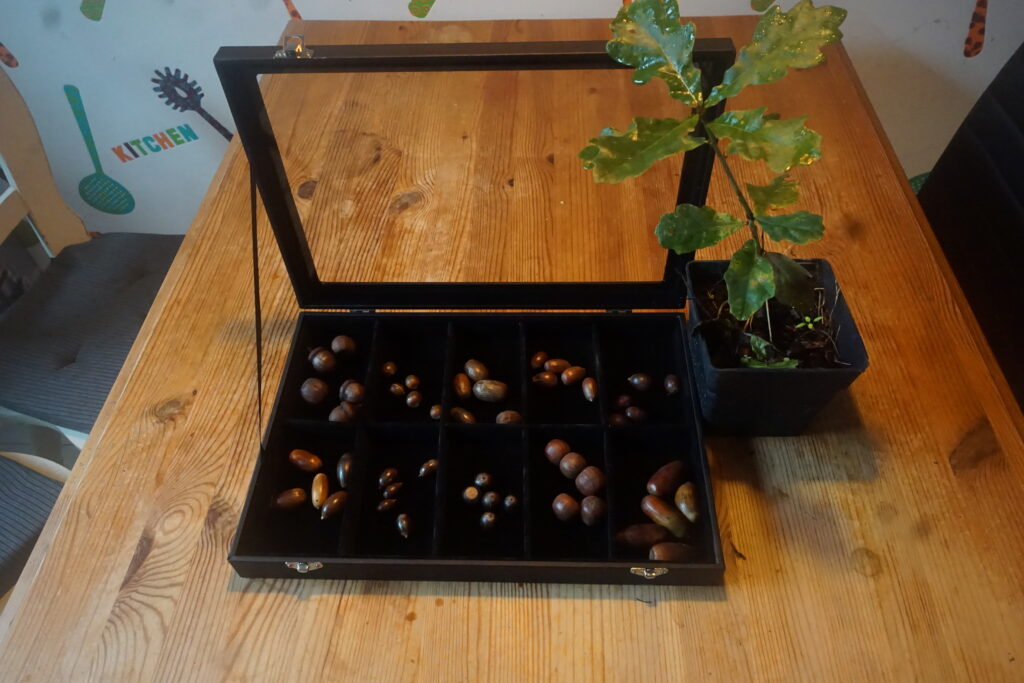
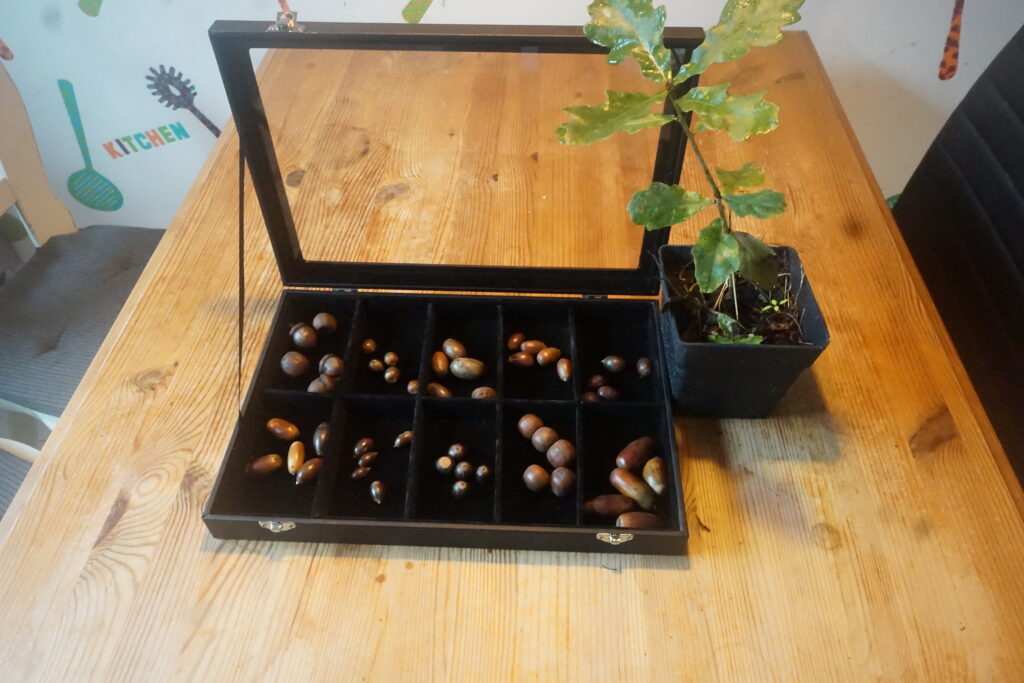
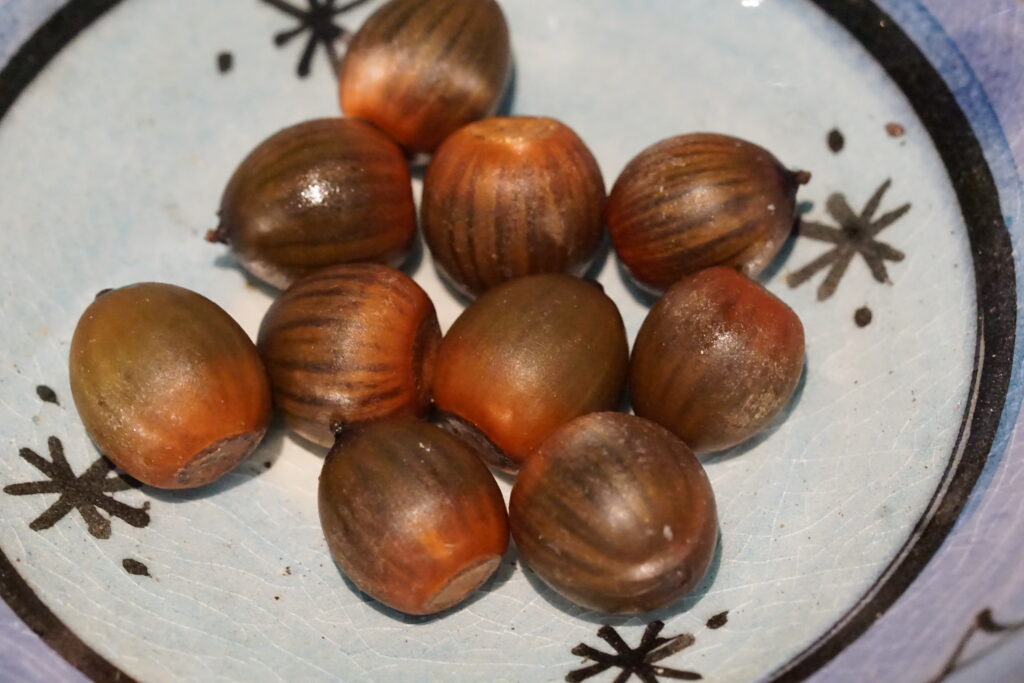
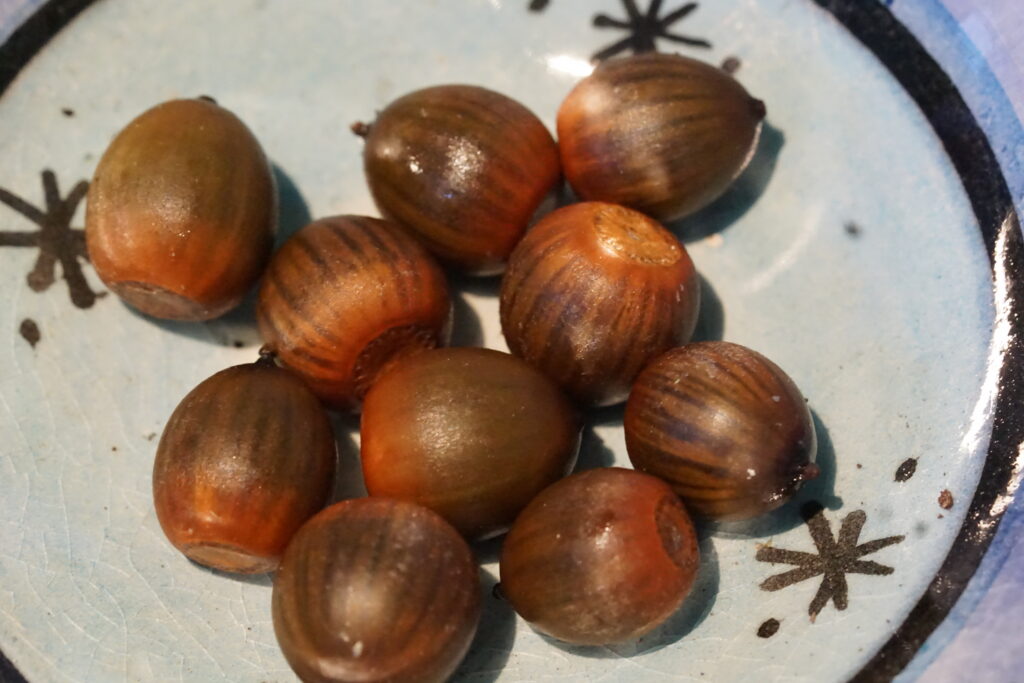
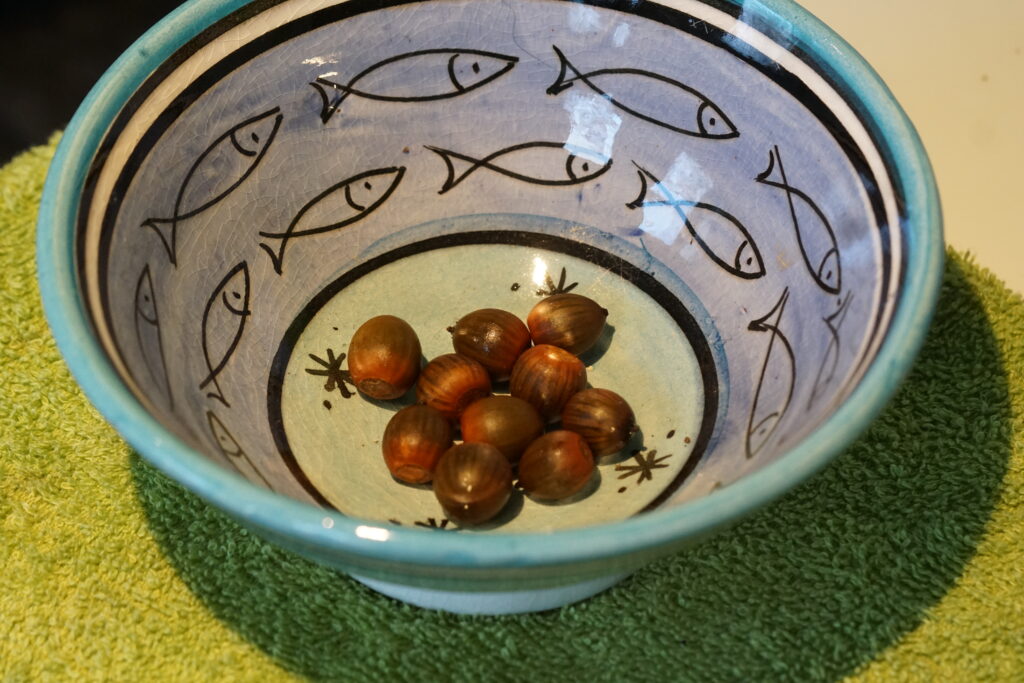
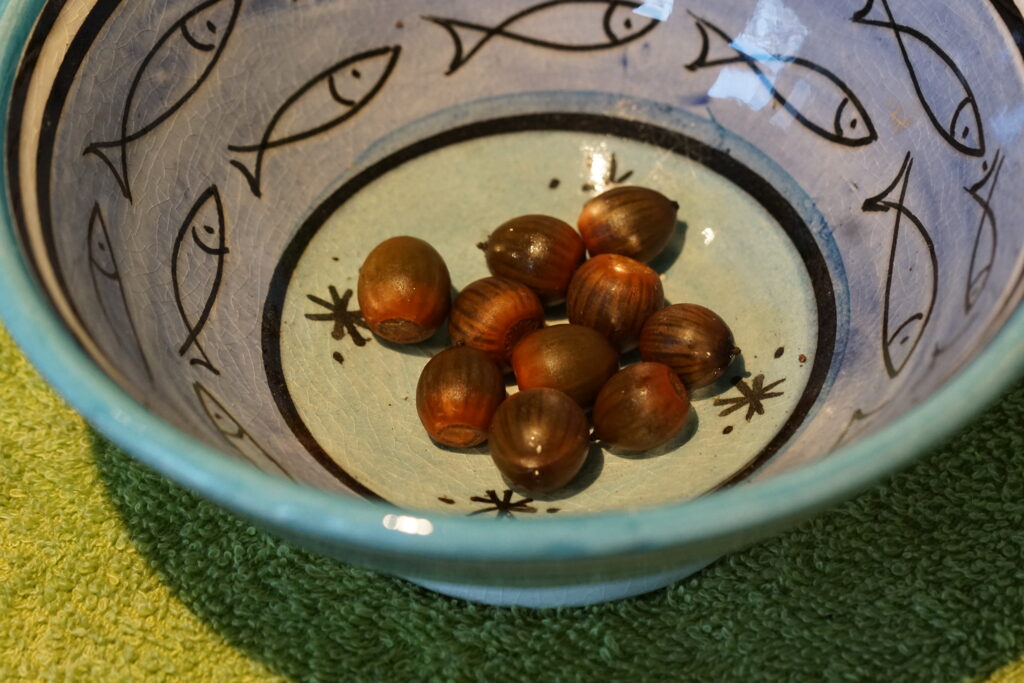
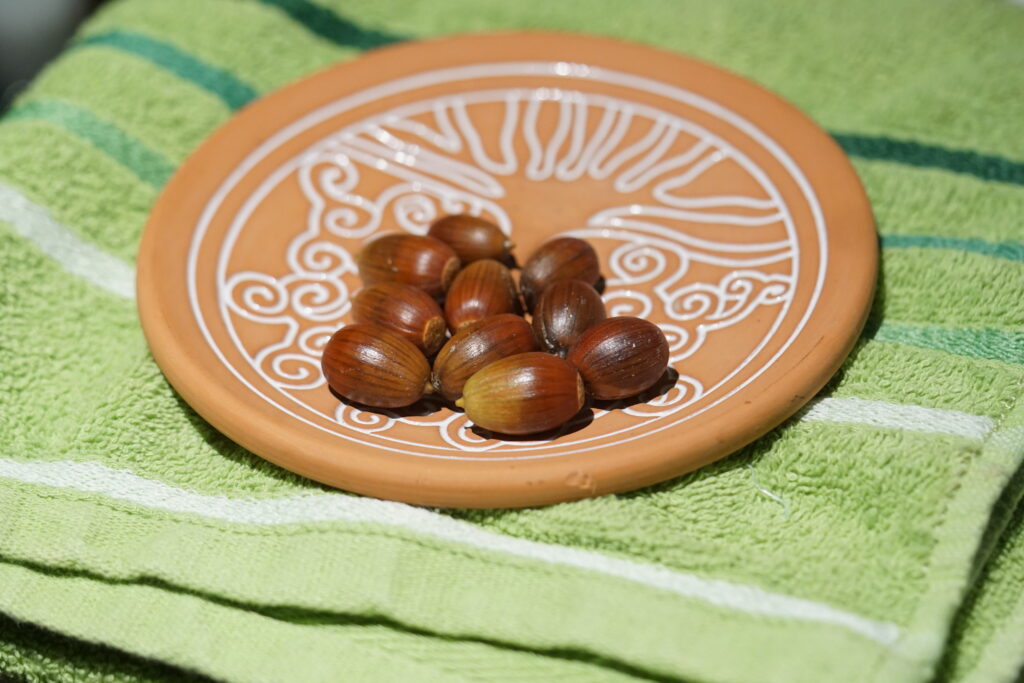
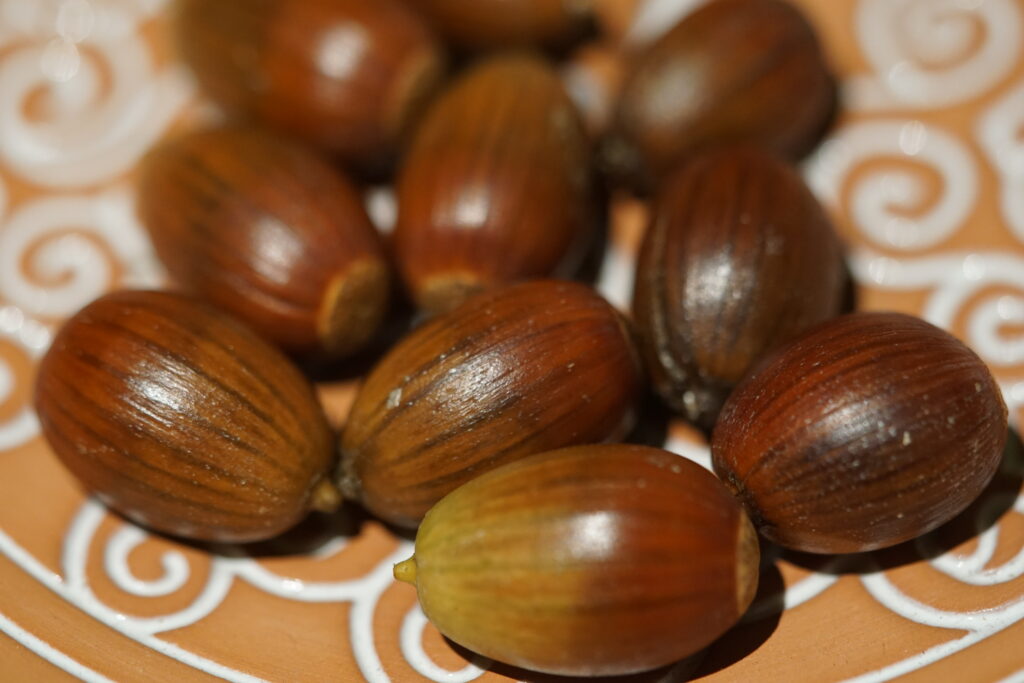
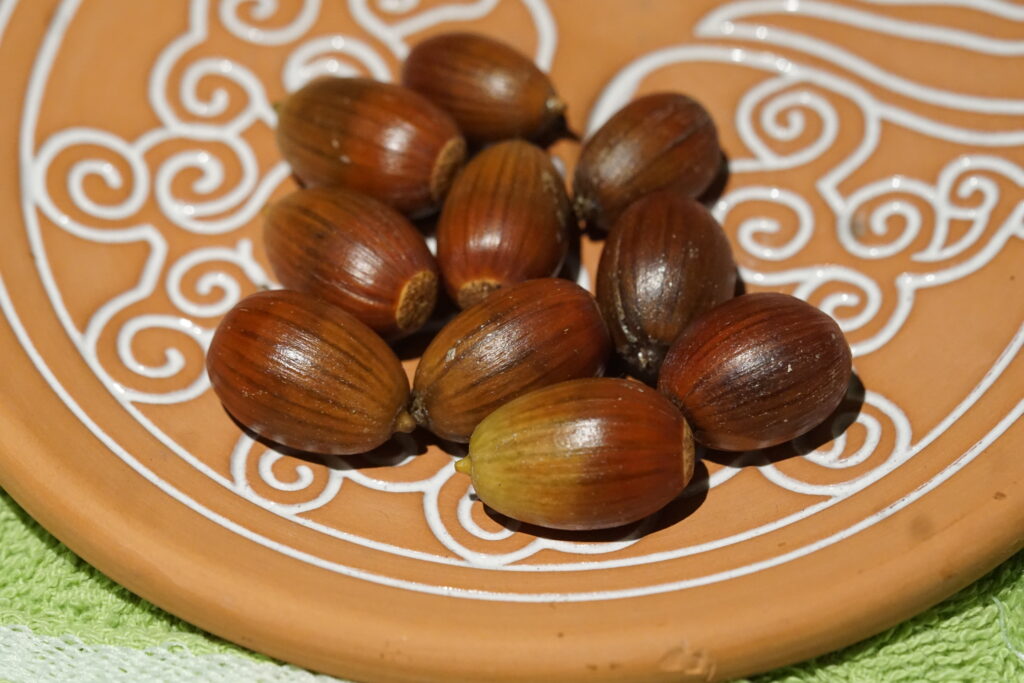
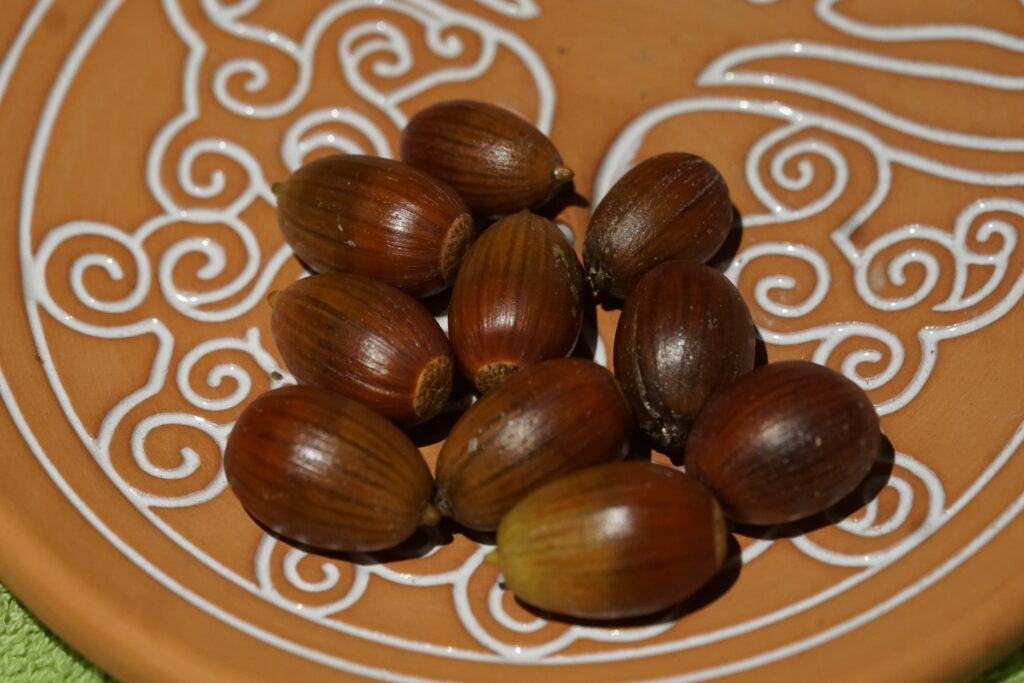
Acorn case – Rare and international oak species The special gift for oak and tree lovers
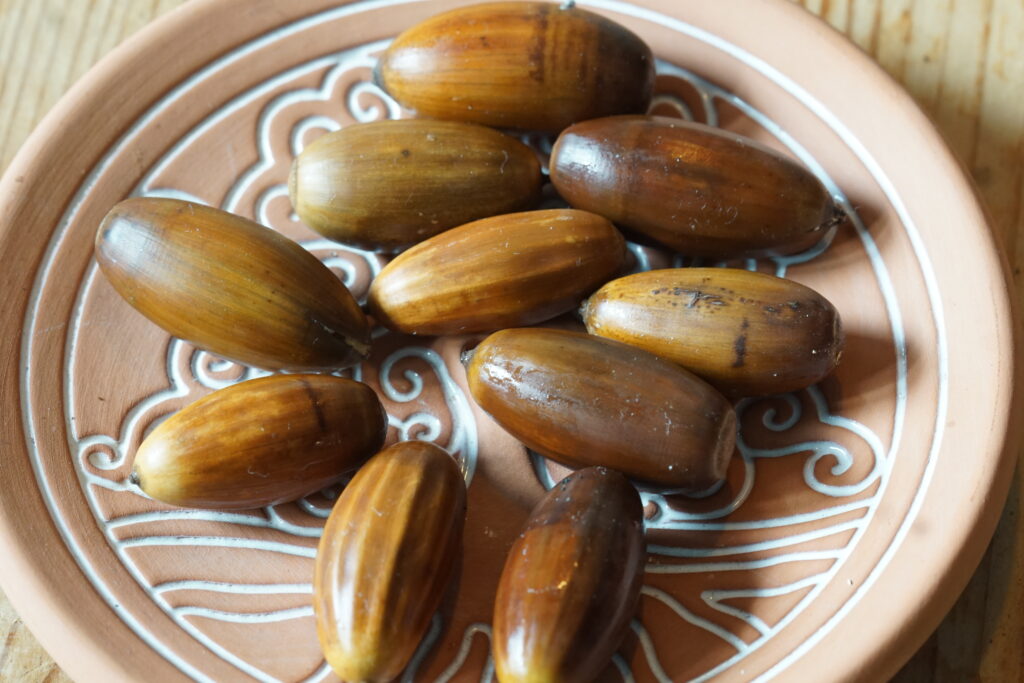
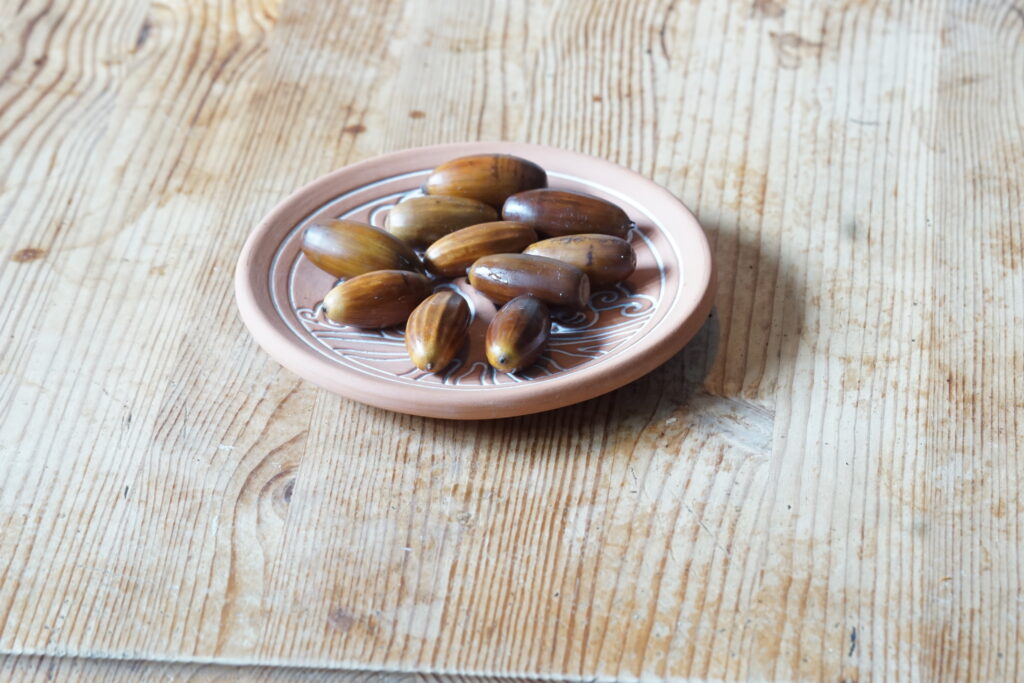
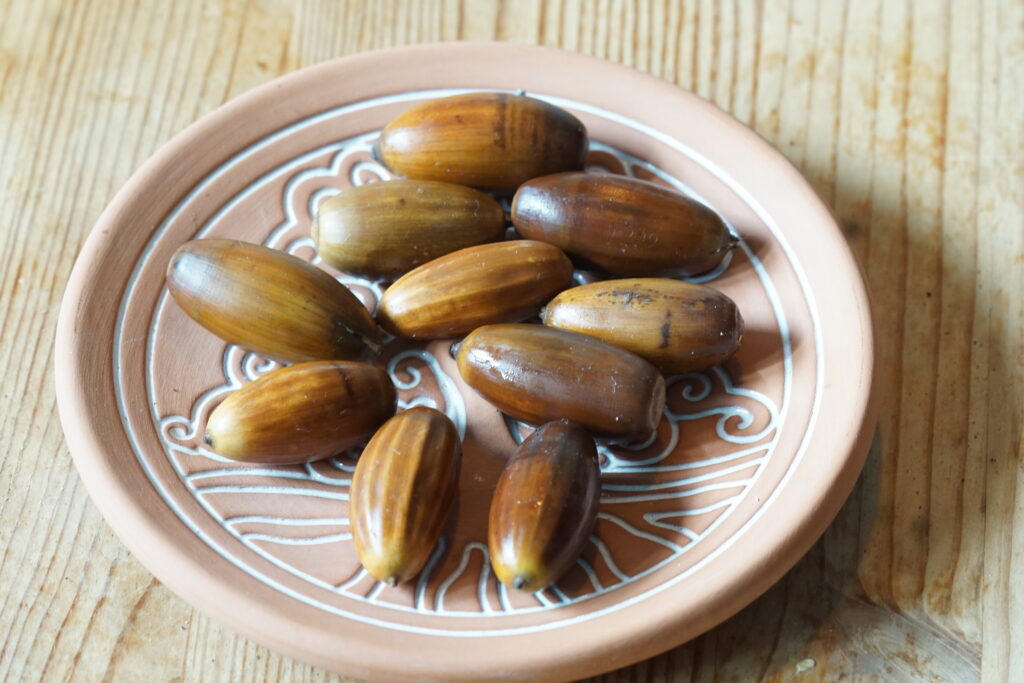
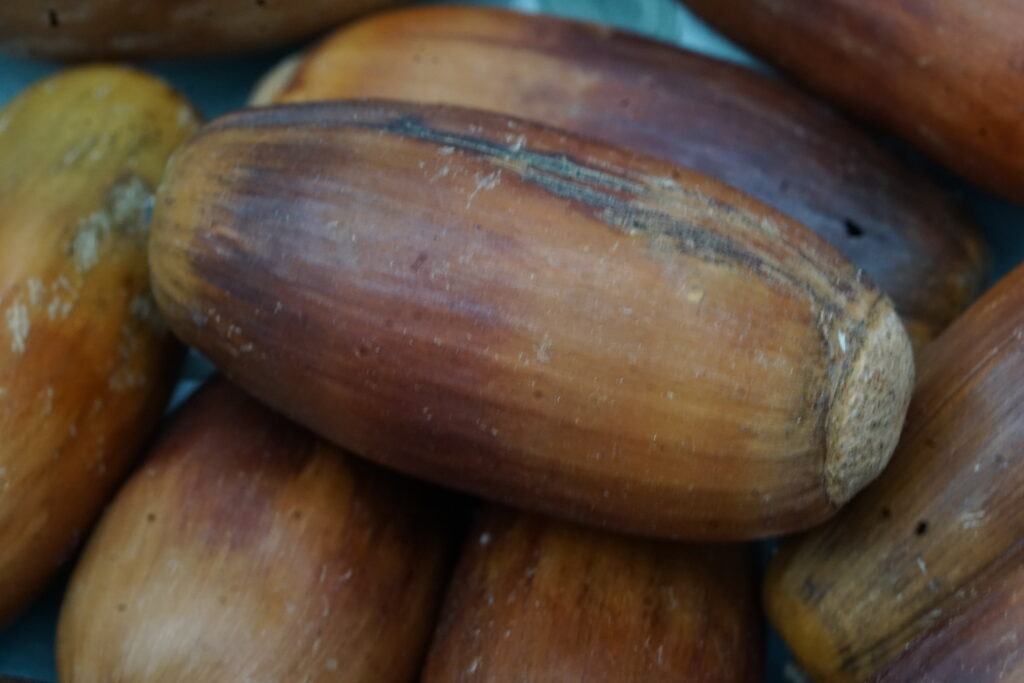
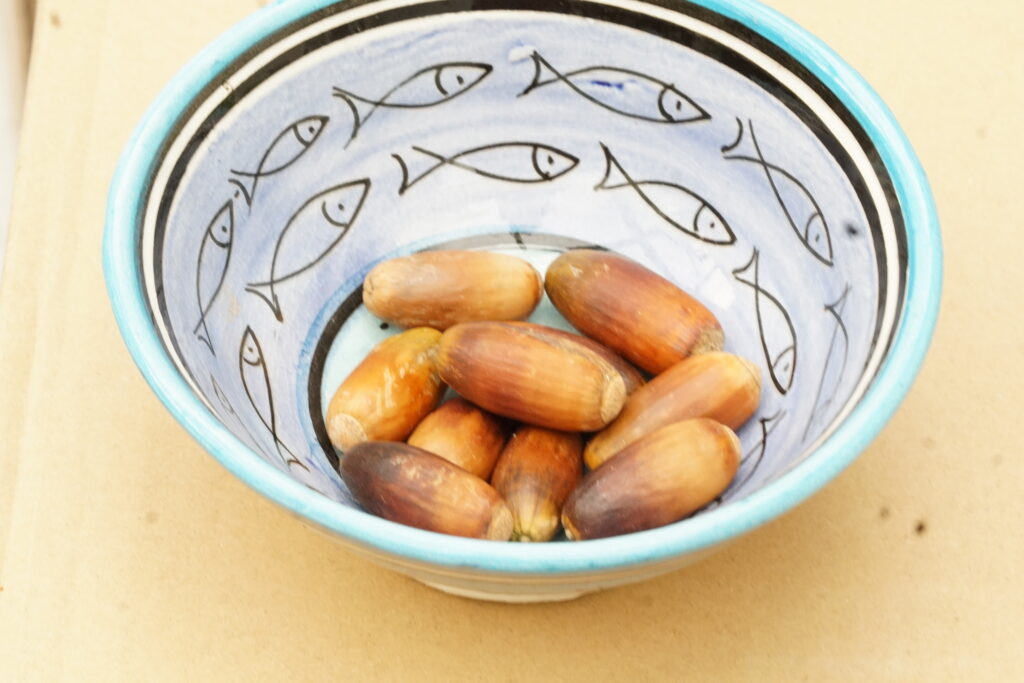
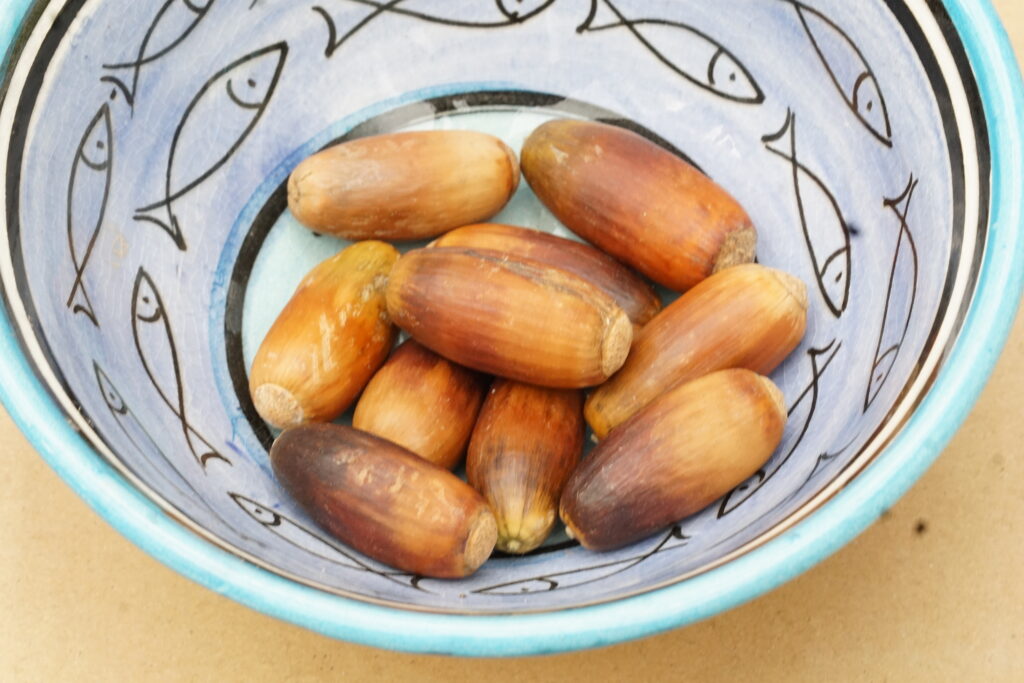
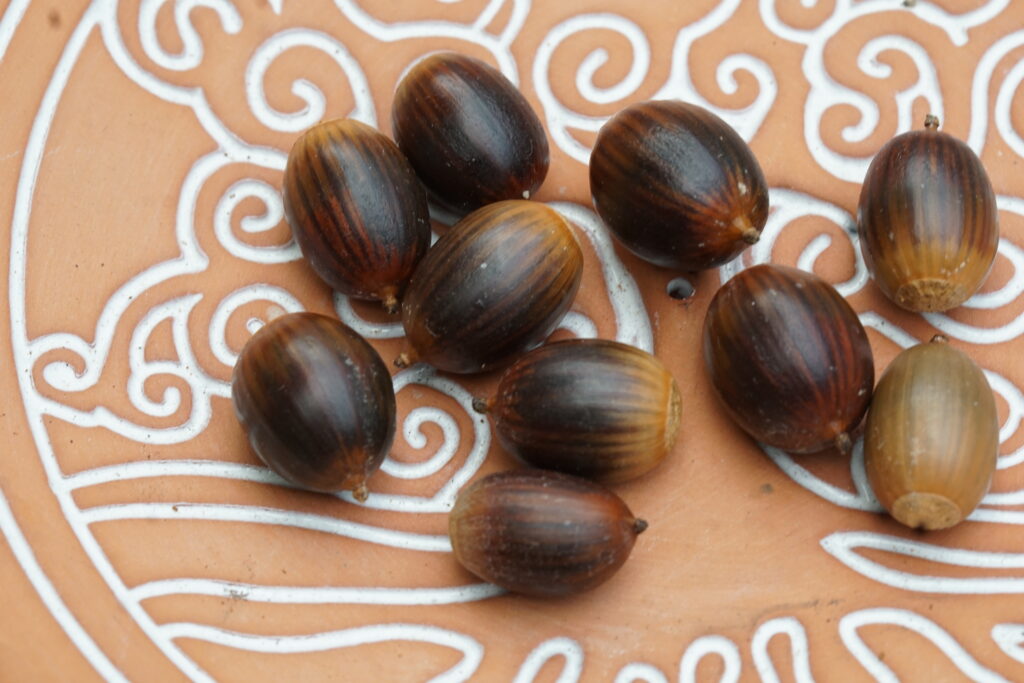
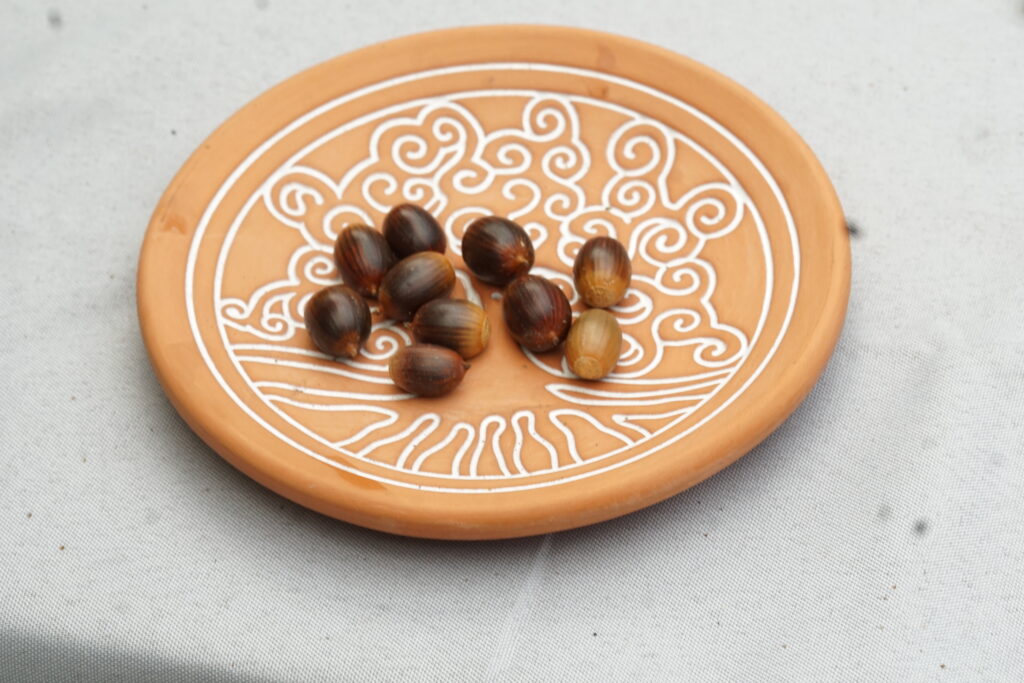
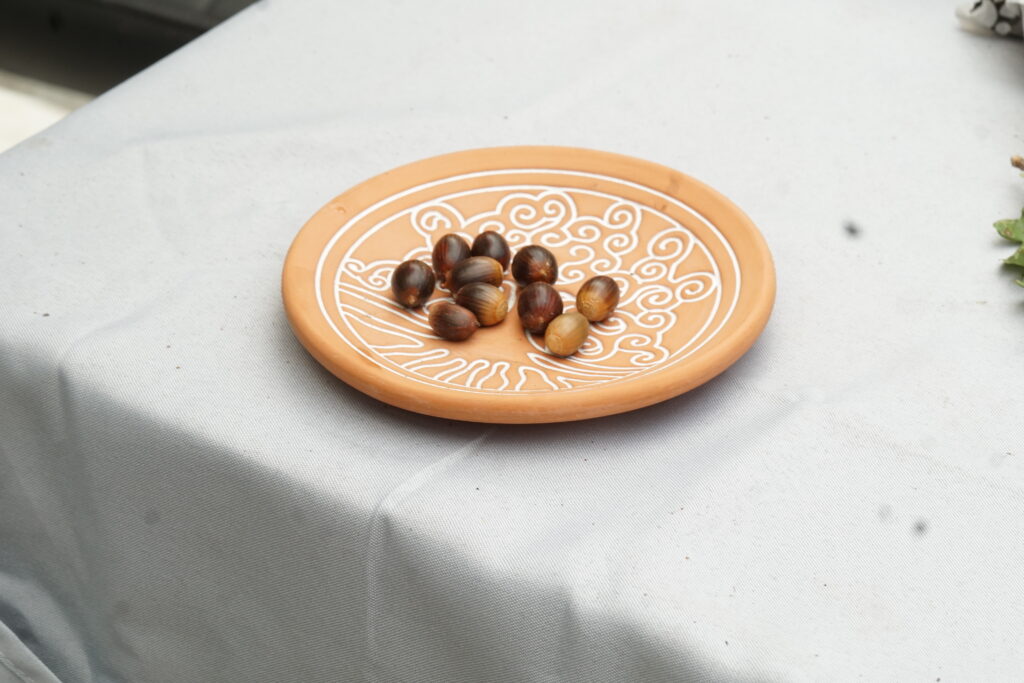
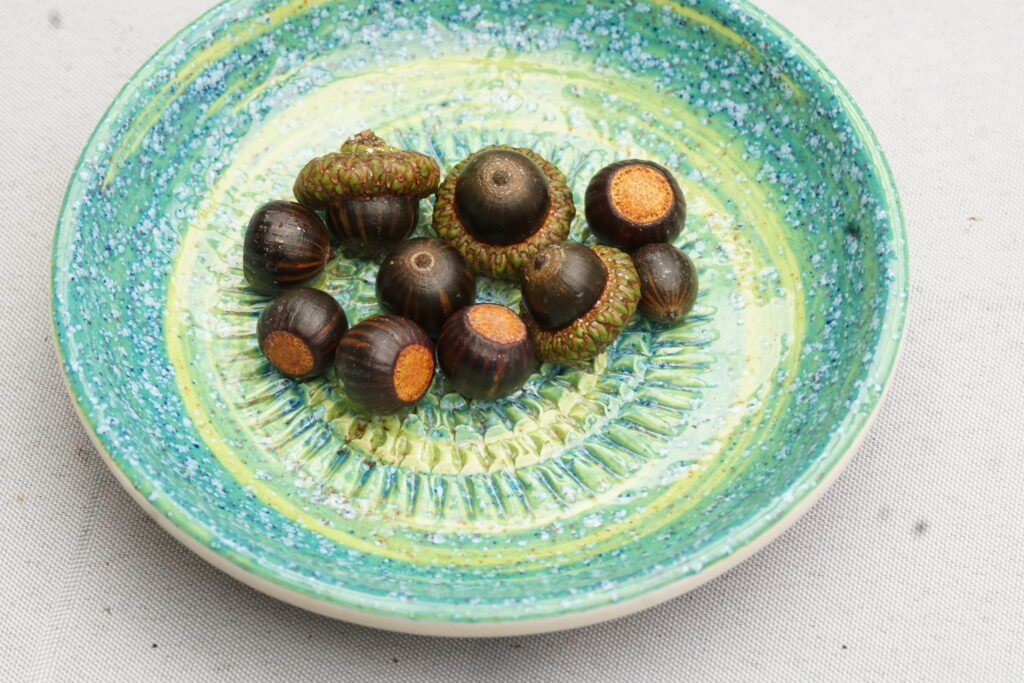
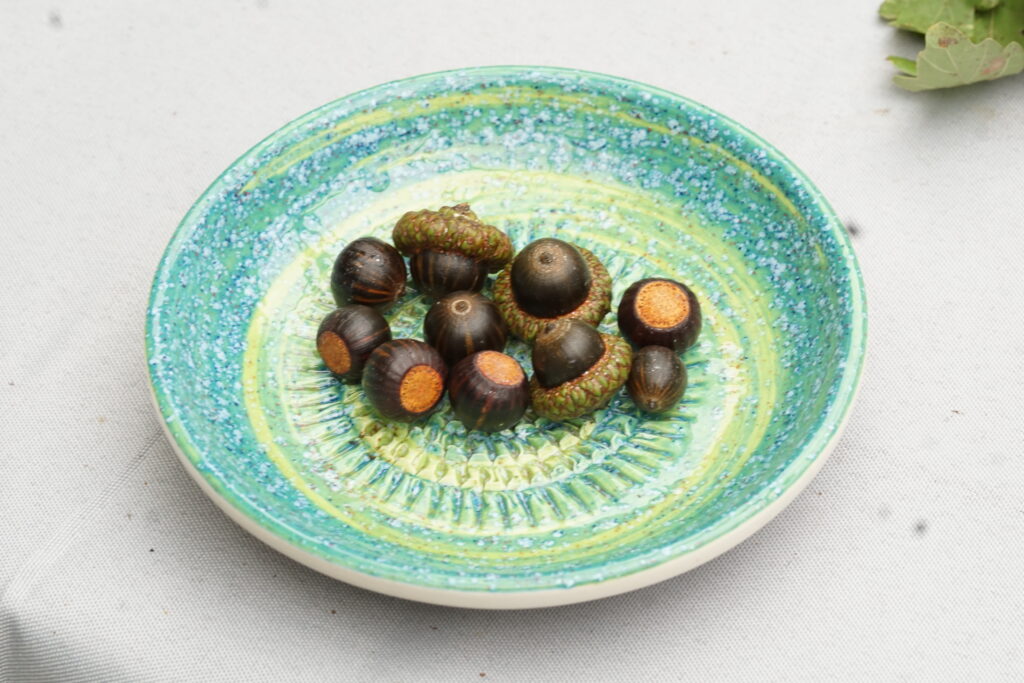
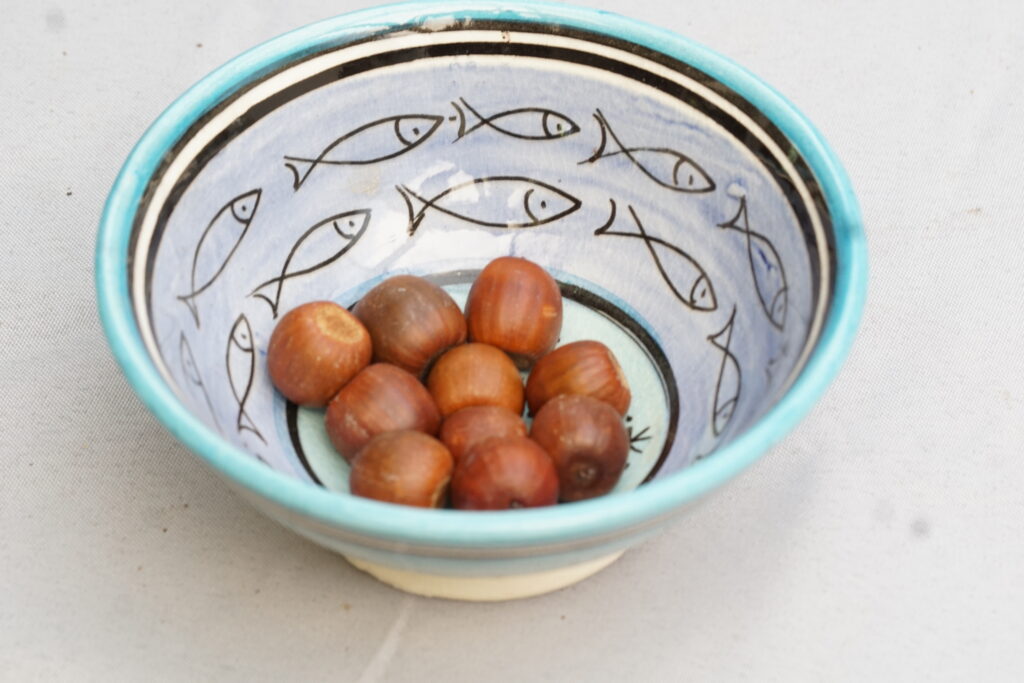
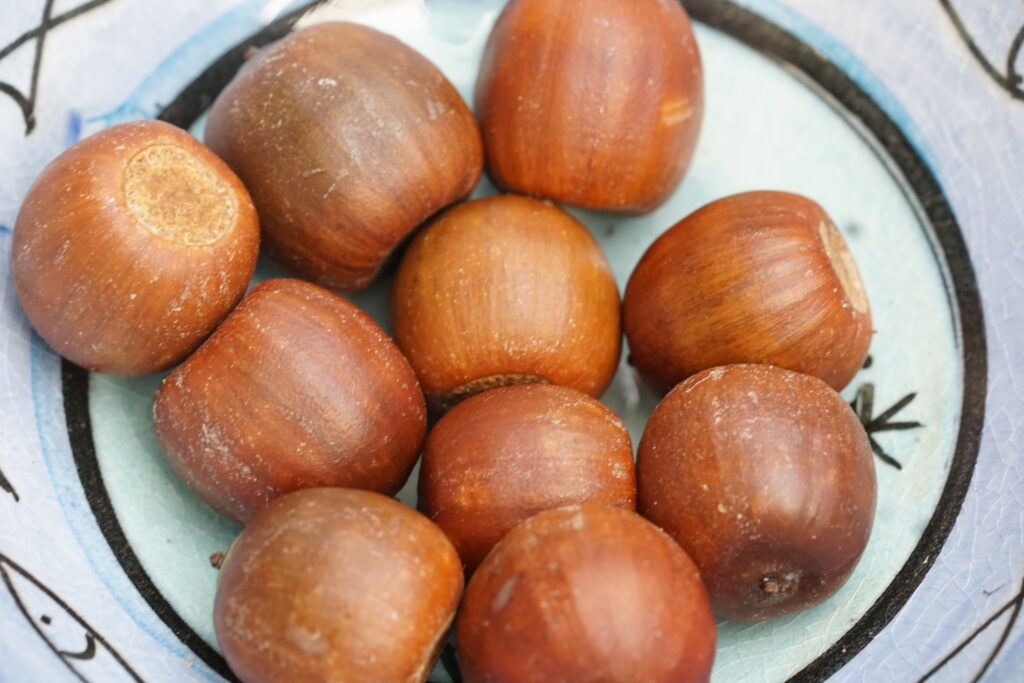
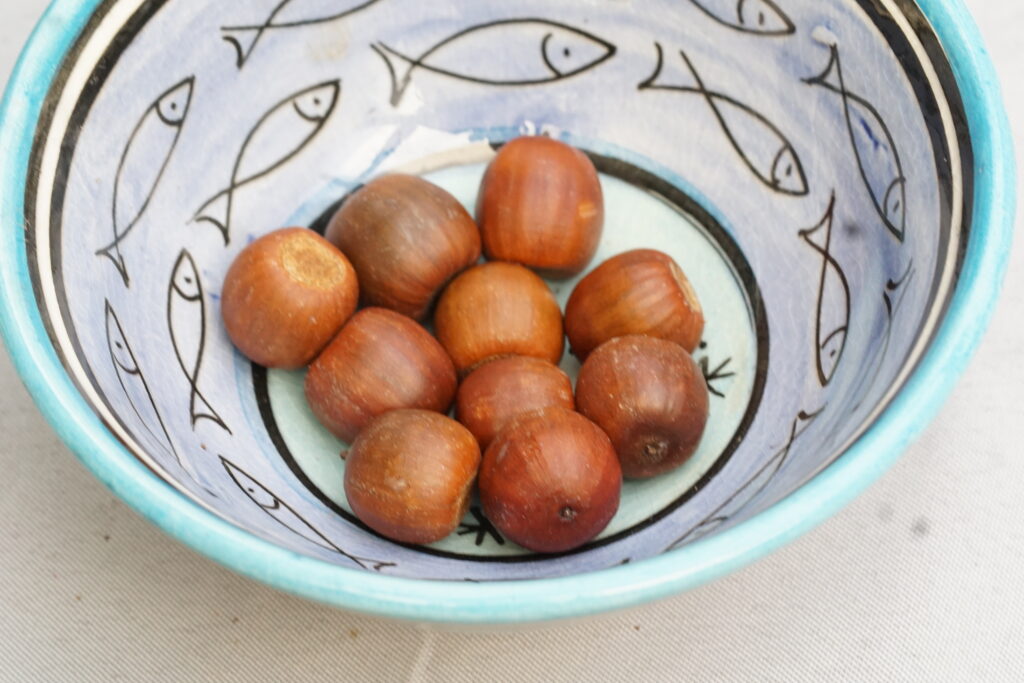
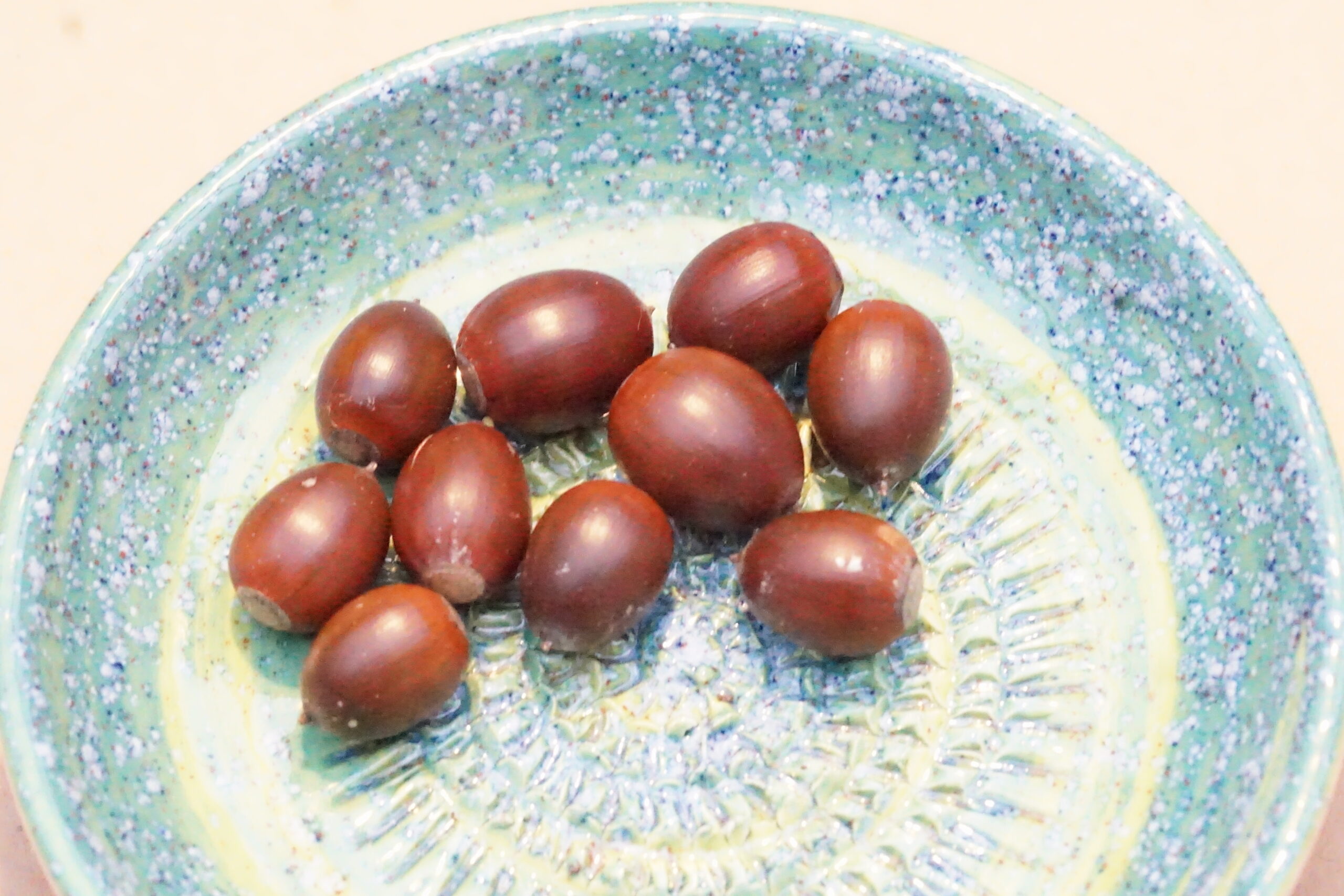
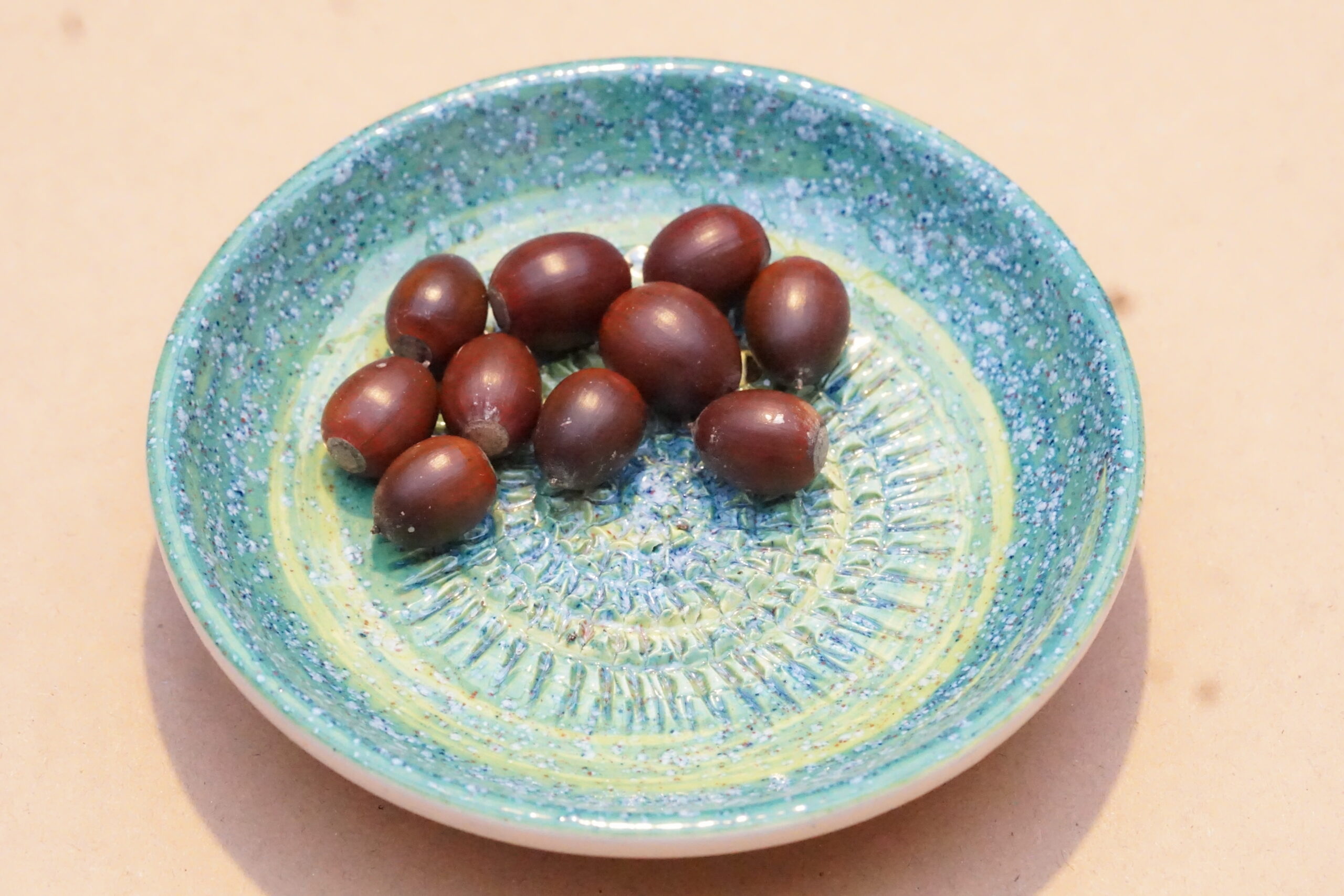
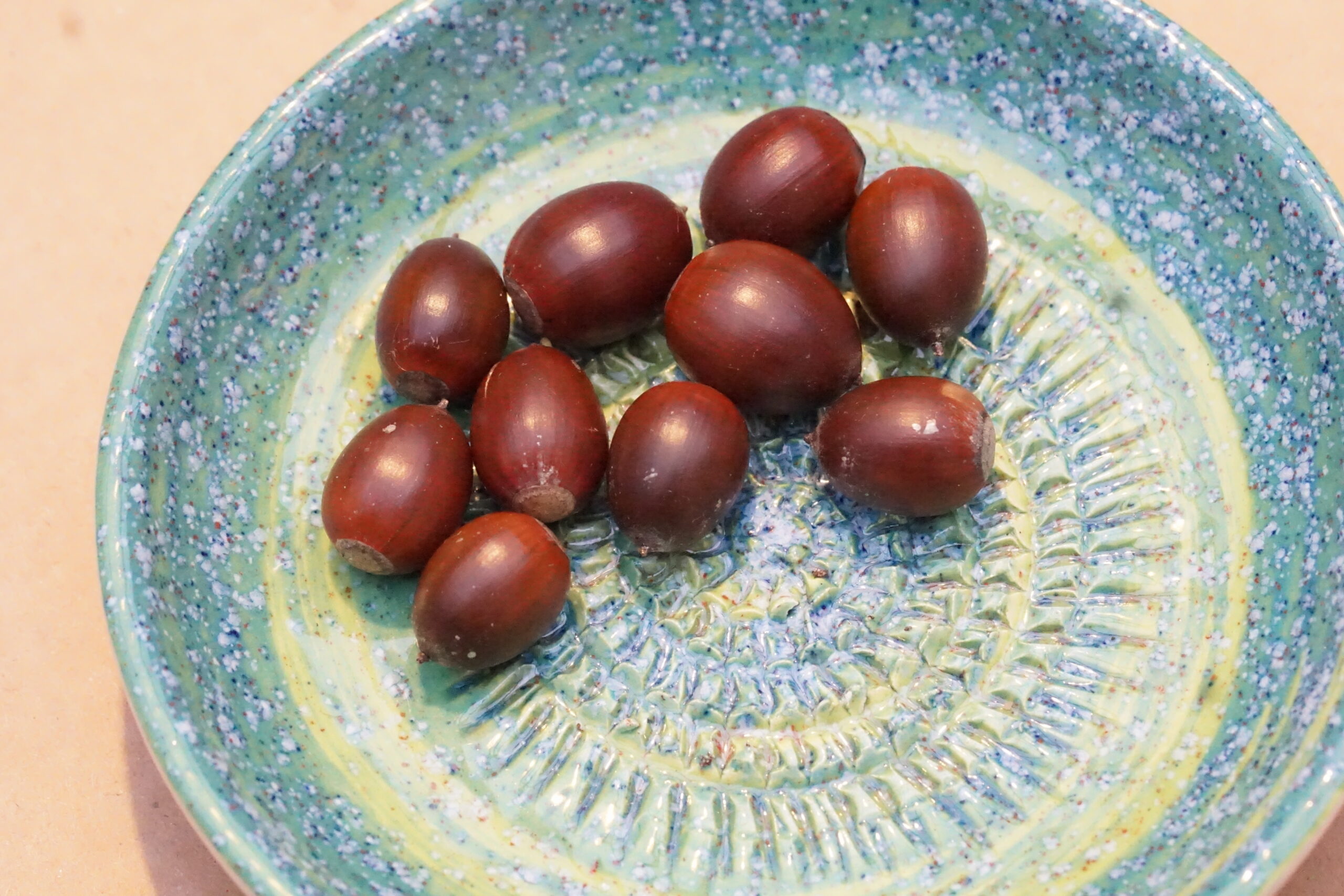
With this acorn case you get a special (and above all rare!) Gift for tree lovers. All acorns were collected (in different places in this world) in September and October 2023. The acorns are currently stored in a cool, low-light place in a slightly moistened soil mixture.
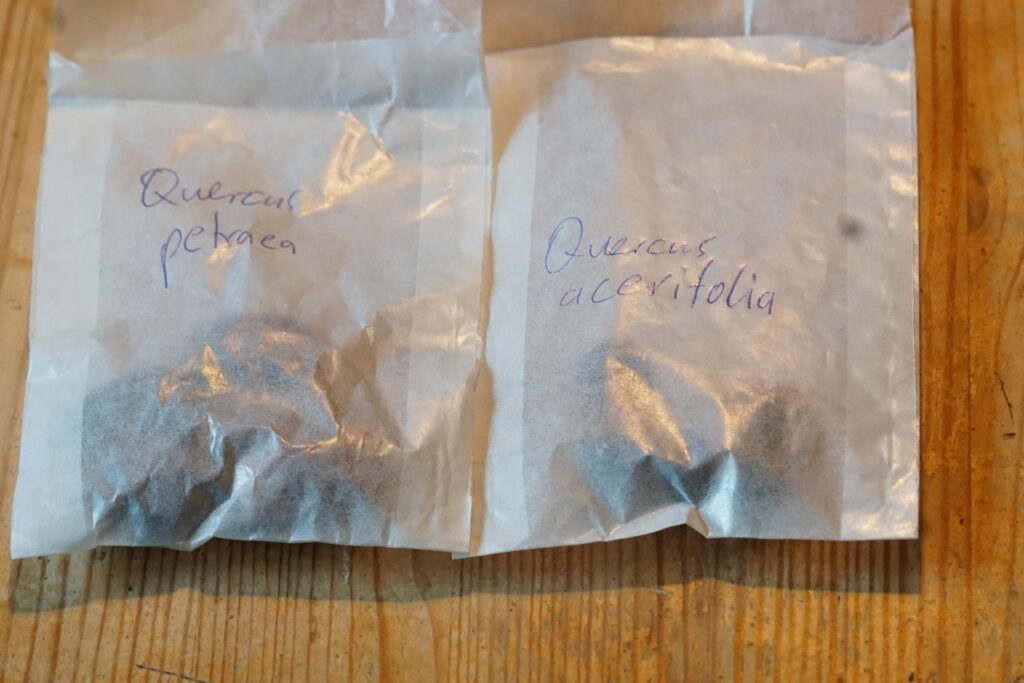
In this case there are 5 acorns each from: * Quercus acerifolia, maple-leaved oak (very rare). Home: Arkansas, USA * Quercus petraea, sessile oak. Home: Central Europe
* Quercus saltillensis (very rare). Home country: Mexico * Quercus illicifolia (scrub oak). Home: Northeastern USA.
* Quercus parvia (Santa Cruz Island Oak). Home: California, USA. * Quercus heterophylla (Bartram’s oak). Home: Eastern USA
* Quercus cerris (wrench oak). Home: South of France * Quercus depressa (Low Oak) (rare). Homeland: Mexico.
* Quercus robur (English oak). Home: Central Europe * Quercus rubra (red oak). Home country: USA
Total quantity: 50 acorns.
Of course, the acorns are not added to the case “naked” but in small bags with a moistened earth mixture (to survive the transport well).
Attention: in order for different acorns to germinate next year, it is important to treat them appropriately. Quercus acerifolia, Quercus illicifolia, Quercus heterophylla, Quercus cerris, Quercus robur and Quercus rubra should be stored in the refrigerator in a slightly moistened soil mixture for a few weeks, if possible (please keep checking to see if they germinate and then transplant directly).
Quercus petraea, Quercus saltillensis, Quercus parvia, Quercus depressa may start to germinate already this year (please store in soil mixture).
Please plant Quercus saltillensis, Quercus parvia and Quercus depressa protected from frost.
Quercus acerifolia is one of the very rare oak species and is critically endangered in its native Arkansas (USA). It belongs to the group of red oaks. The tree grows 5 to 10 meters high, rarely 15.
The leaves take on a fireplace red color in the fall, gorgeous to look at. It likes sunny exposed sites. Quercus acerifolia is hardy and at the same time climate warming resistant. It prefers dry and calcareous soils.
Quercus parvula (Santa Cruz Island oak) is found primarily on the north slopes of Santa Cruz Island and in the California coastal mountains. It is considered an endemic California species and has year-round foliage. It does not tolerate waterlogging and is only partially sensitive to frost.
Quercus cerris grows up to 200 years old and reaches heights of up to 35 meters. The trunk grows up to 2 meters thick.
The acorns ripen relatively early (September to October) and grow up to 3 cm long. They usually sit in a spiny cupule. Originally they are found in southern France, southeastern Europe (e.g. Albania, Bulgaria) and Italy. Through artificial plantings also exist many specimens in England, New Zealand and Argentina. In Central Europe, this tree species is a common park tree. In southern Europe it is one of the most common forest trees.
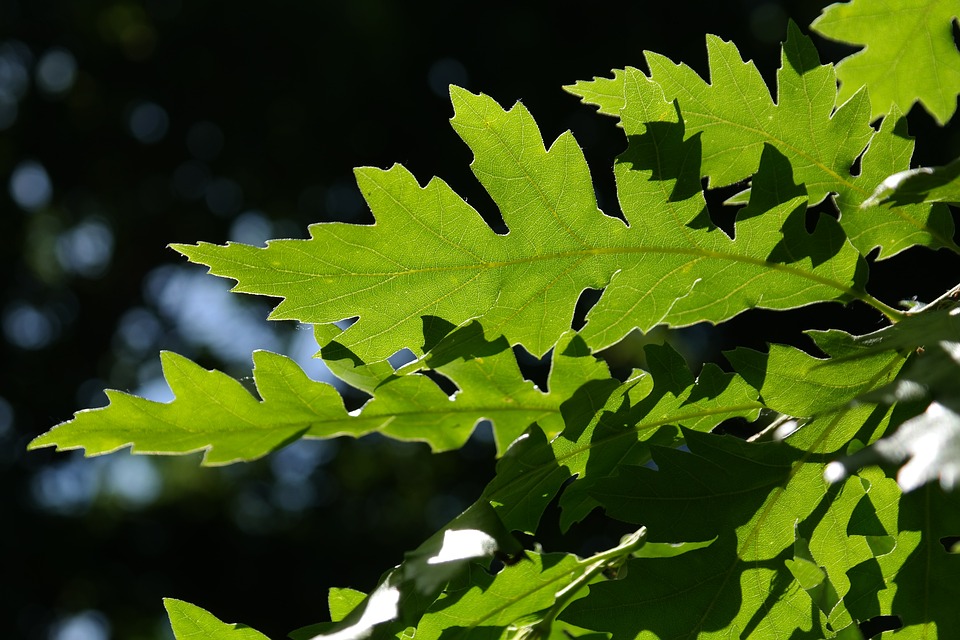
The leaves are dark green in summer and turn yellowish or reddish in autumn. It is considered to be resistant to urban climates. The flowers of the cercia are green-red. The flowering period is from April to May. As a deciduous tree, it loses its leaves in winter.
As a site, this oak species prefers warm and nutrient-rich soils. It grows on both calcareous and acidic silicate rock. Nevertheless, the distorting oak likes it best alkaline. The more calcareous the soil substrate, the better it tolerates drought.However, dry sandy soils are an exclusion criterion. The wood is very suitable for building (e.g. for railroad sleepers) or also as firewood. The acorns are often used as pig feed. The juice that comes out after bark injury can be made into syrup and used as a sugar substitute. Quercus cerris is very robust against wind and heat. Even air pollution and road salt do not seem to bother her. It is also quite resistant to pests. Oak processionary moth or oak splitting beetle have it with this plantheavy.
When young, Quercus cerris grows up to 30 cm per year.
In the current “temperate” zones, the cedar is considered the tree of the future against global warming. It tolerates two to three months of summer drought. Very well it can be grown as a pot plant (in very deep pots), moreover, it is very frost hardy. It tolerates temperatures down to – 20 degrees.
This species does not yet have a unique name. The botanist who discovered this species has yet to publish a scientific paper on it. Similar to Quercus miquihanensis. This would mean that it would be a species similar to the one found in Mexico.
The acorns come from a harvest of September 2023 in the south of France.
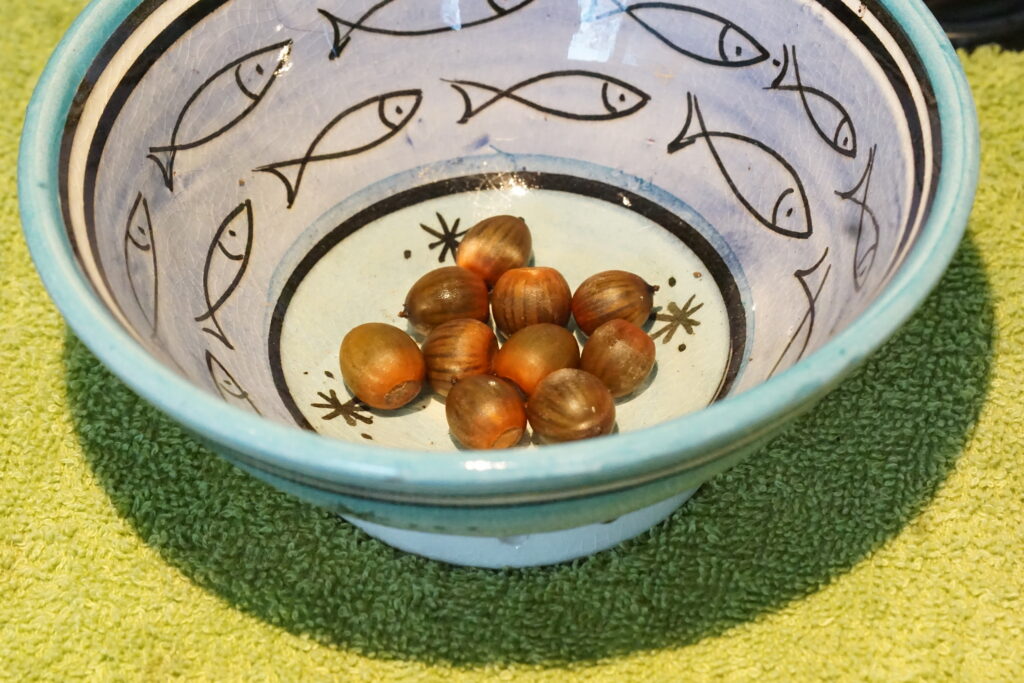
Quercus illicifolia (scrub oak) is native to the northeastern and southeastern United States and Canada, respectively. It grows up to 7 meters tall. Its inner pinkish bark is striking. The leaves take on a yellow or reddish-brown color in the fall. The length of the leaves is between 5 and 12 cm. The acorns are roundish and very small (about 1 cm).
The annual growth of Quercus illicifolia is very low. This species likes sandy or stony soils. Originally it is often found in the mountains. In its native habitat, this species is a helpful component of the autumn diet of black bears. The Iroquois use the acorns for gynecological problems.
Quercus heterophylla (Variegated Oak, Bartram’s Oak) is originally from the USA (eastern range). It is a hybrid of Quercus robur and Quercus phellos. In the Netherlands, one tree of this species is known, which has a trunk circumference of 4 meters. Maximum heights of this tree are 26 meters.
Leaves are oval, elliptic, oblong to lanceolate, smooth-edged to coarsely toothed, glossy green, 8-18 cm long. In autumn, these turn red. The upper side is shiny green and bare. The underside is lighter and hairy only in the vein axils. Quercus heterophylla is very frost hardy (to -23 degrees) and tolerates road salt. That is why this tree is found sporadically in Europe as an avenue tree. This species also tolerates wet and poor soils, provided that they are not too calcareous. Tend to the soil should be rich in nutrients and slightly acidic. Overall, this tree species is tolerant of different soil types: Loess, clay, peaty soil, light clover soil, sandy soil, loamy Soil.
The tree sheds only a few acorns, these have a similar appearance to Quercus rubra.
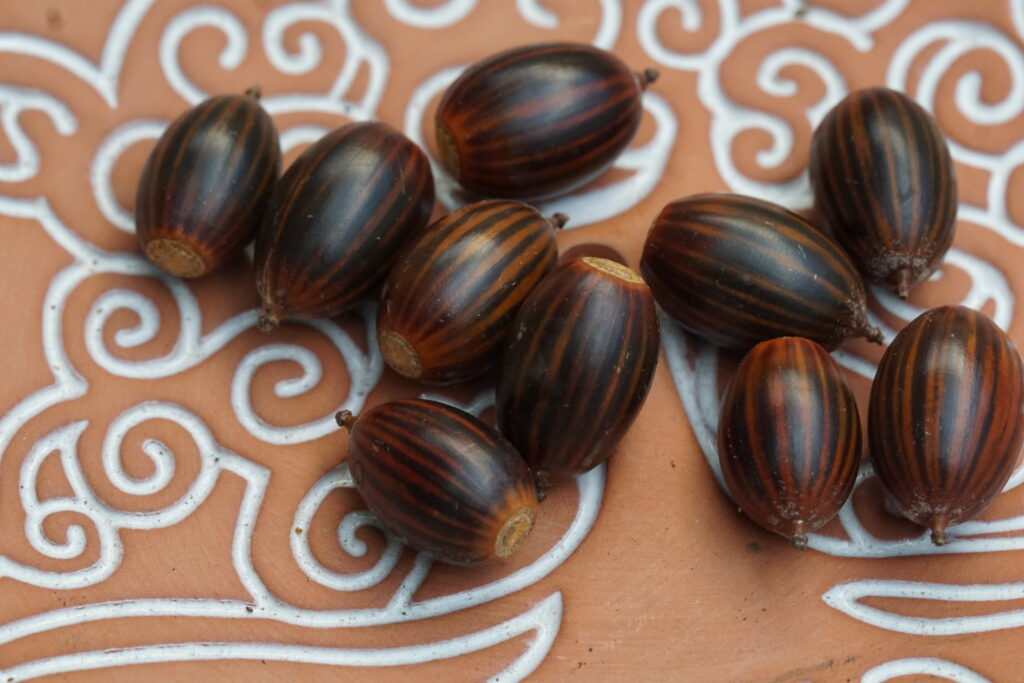
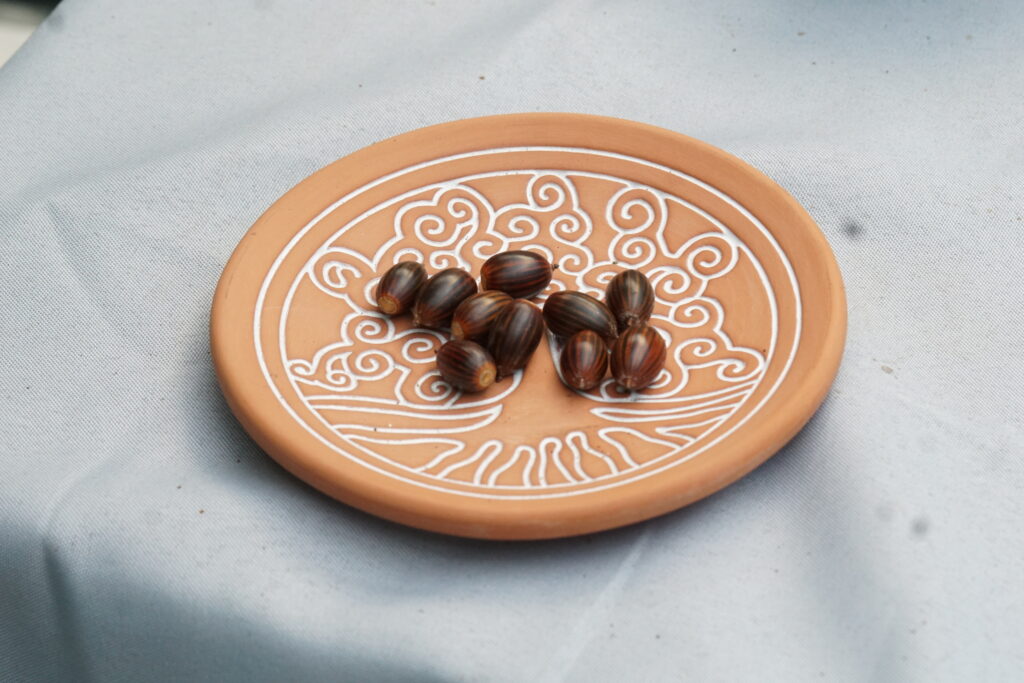
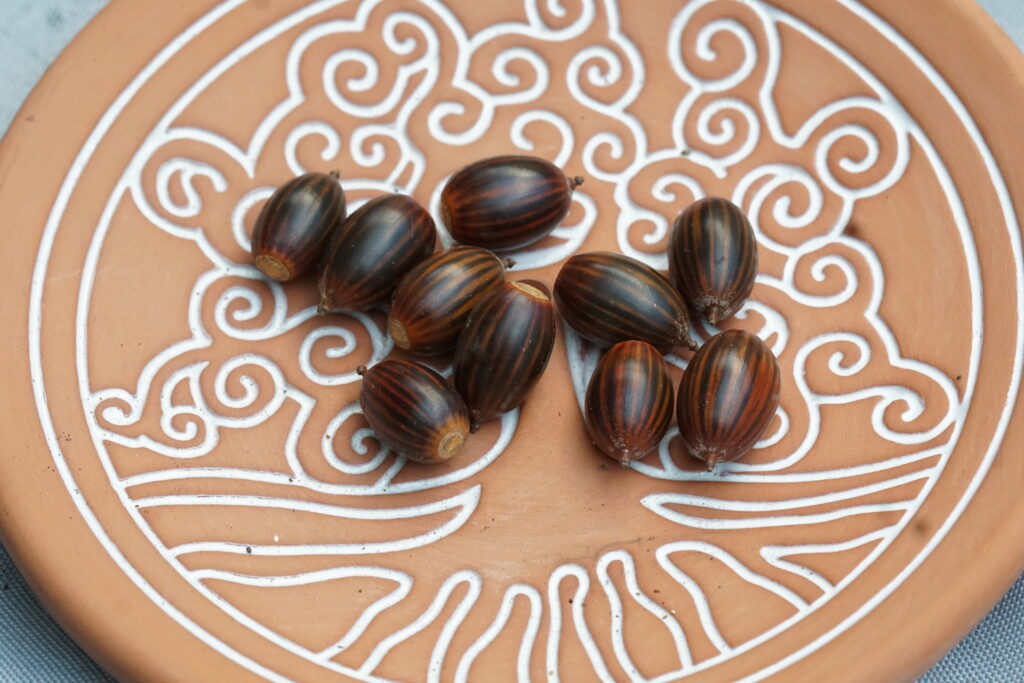
Quercus saltillensis is originally found in Mexico. Their striped acorns are particularly impressive. These are relatively small (usually at about 7 mm).
The species is climate warming resistant. It occurs mainly at high altitudes between 1900 and 2500 meters. The tree grows up to 5 meters high.
No VAT ID, as small business owner according to §19 (1) UStG.
Cookie-Zustimmung verwalten
Um dir ein optimales Erlebnis zu bieten, verwenden wir Technologien wie Cookies, um Geräteinformationen zu speichern und/oder darauf zuzugreifen. Wenn du diesen Technologien zustimmst, können wir Daten wie das Surfverhalten oder eindeutige IDs auf dieser Website verarbeiten. Wenn du deine Zustimmung nicht erteilst oder zurückziehst, können bestimmte Merkmale und Funktionen beeinträchtigt werden.
Funktional
Always active
Die technische Speicherung oder der Zugang ist unbedingt erforderlich für den rechtmäßigen Zweck, die Nutzung eines bestimmten Dienstes zu ermöglichen, der vom Teilnehmer oder Nutzer ausdrücklich gewünscht wird, oder für den alleinigen Zweck, die Übertragung einer Nachricht über ein elektronisches Kommunikationsnetz durchzuführen.
Vorlieben
Die technische Speicherung oder der Zugriff ist für den rechtmäßigen Zweck der Speicherung von Präferenzen erforderlich, die nicht vom Abonnenten oder Benutzer angefordert wurden.
Statistiken
Die technische Speicherung oder der Zugriff, der ausschließlich zu statistischen Zwecken erfolgt.Die technische Speicherung oder der Zugriff, der ausschließlich zu anonymen statistischen Zwecken verwendet wird. Ohne eine Vorladung, die freiwillige Zustimmung deines Internetdienstanbieters oder zusätzliche Aufzeichnungen von Dritten können die zu diesem Zweck gespeicherten oder abgerufenen Informationen allein in der Regel nicht dazu verwendet werden, dich zu identifizieren.
Marketing
Die technische Speicherung oder der Zugriff ist erforderlich, um Nutzerprofile zu erstellen, um Werbung zu versenden oder um den Nutzer auf einer Website oder über mehrere Websites hinweg zu ähnlichen Marketingzwecken zu verfolgen.